Beneath the Surface
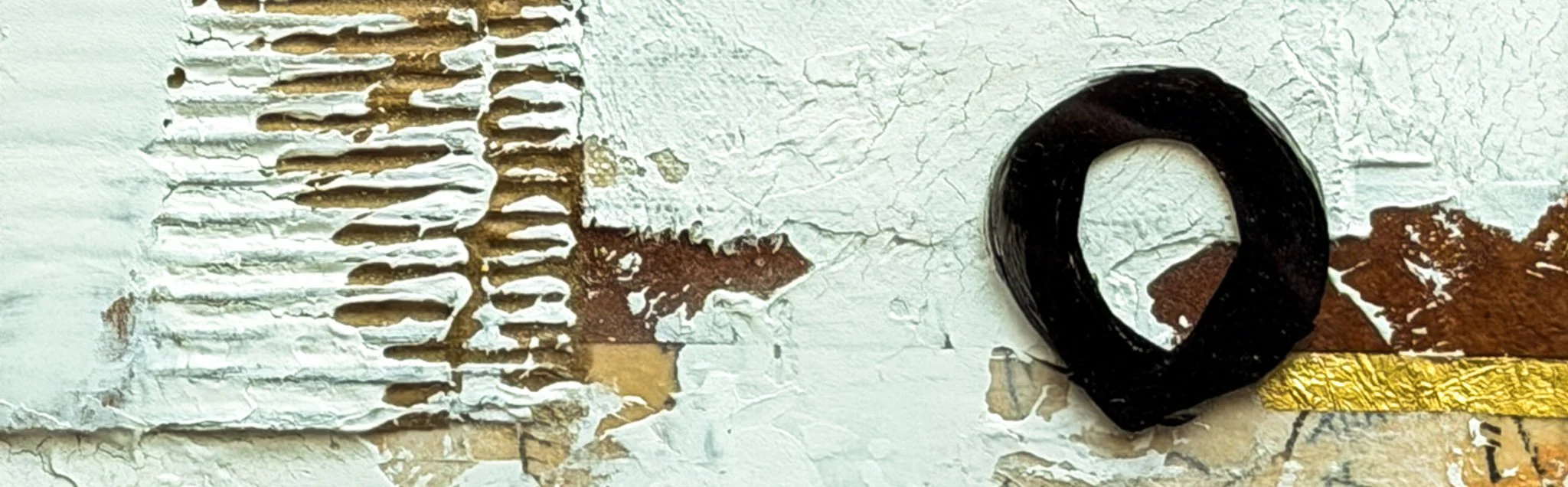
These works begin with layers—paint, plaster, paper, and gathered materials that carry texture, history, and signs of imperfection. I’m drawn to the way these elements hold memory, each layer partially obscuring and revealing what came before.
Over this surface, I nail a sheet of plexiglass—a clear boundary, like a window. It allows the viewer to look through to what lies beneath, while also creating a sense of distance and protection.
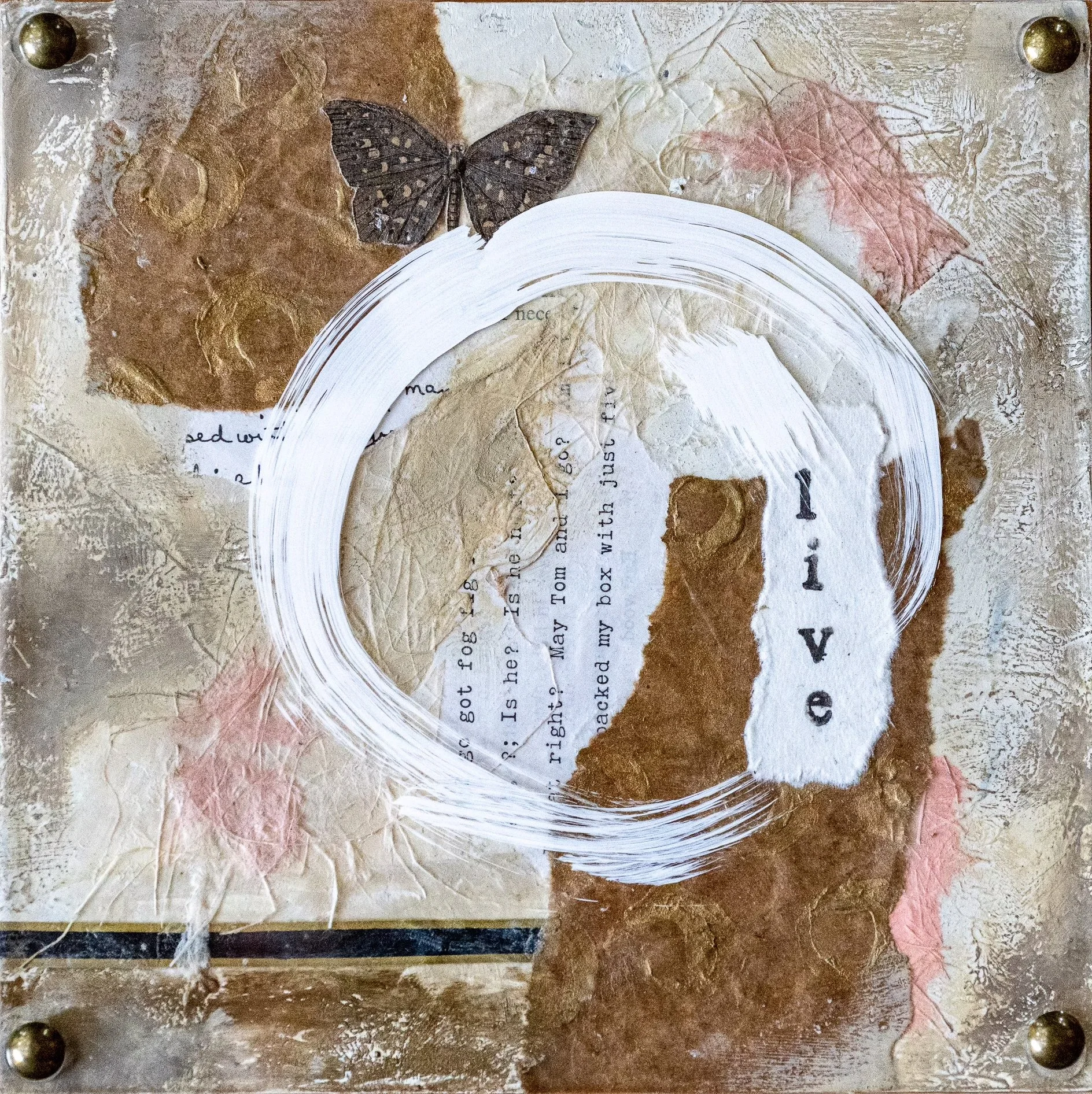
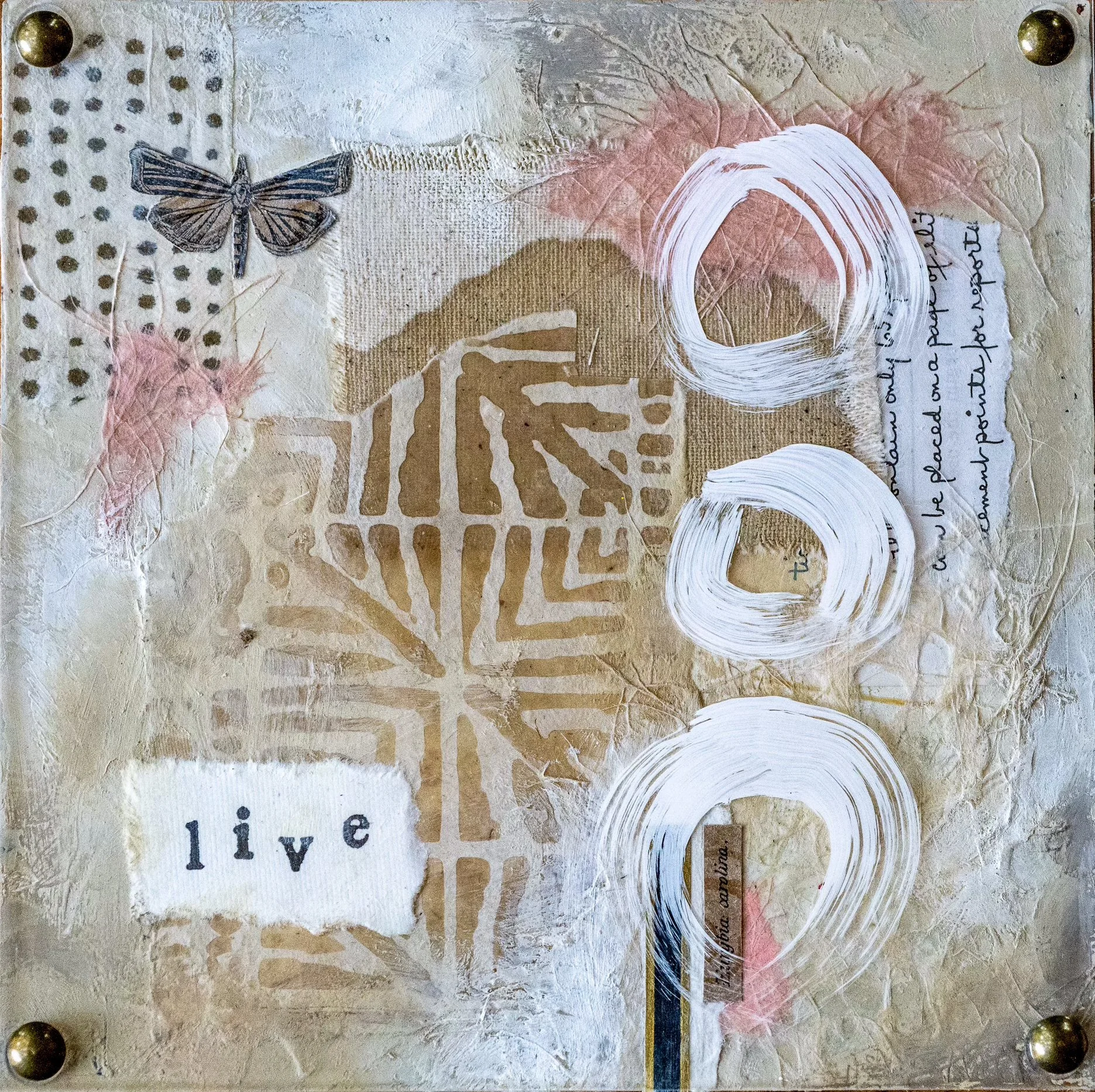
On the plexiglass, I paint simple marks, often variations of a circle in black or white. For me, these gestures suggest a kind of wholeness—something quiet and steady held above the complexity below.
The Memory of Stone Collection
As a girl growing up in the mountains of Colorado, it may seem a bit unexpected that I have been drawn to the ocean for as long as I can remember. When it came time for college, being near the Pacific was nearly my only criteria. And later in life, when I learned to sail, I had the distinct feeling that I was finally coming home.
In 2025, we were given the opportunity to sail with friends in the Virgin Islands, and we gladly said yes. When we returned, I imagined creating a series inspired by the obvious beauty I had seen—the pristine blue water, the vibrant fish, the crisp white sails.
But that isn’t what came through.
Instead, I found myself drawn to the patina of age—the weathering shaped by years of wind, salt, sun, and storms. Surfaces softened and marked by time. Colors faded, edges worn, materials transformed.
And still, there is beauty in what remains.
That is what found its way into my papers and paints: quiet resilience, textured memory, and the kind of beauty that endures.
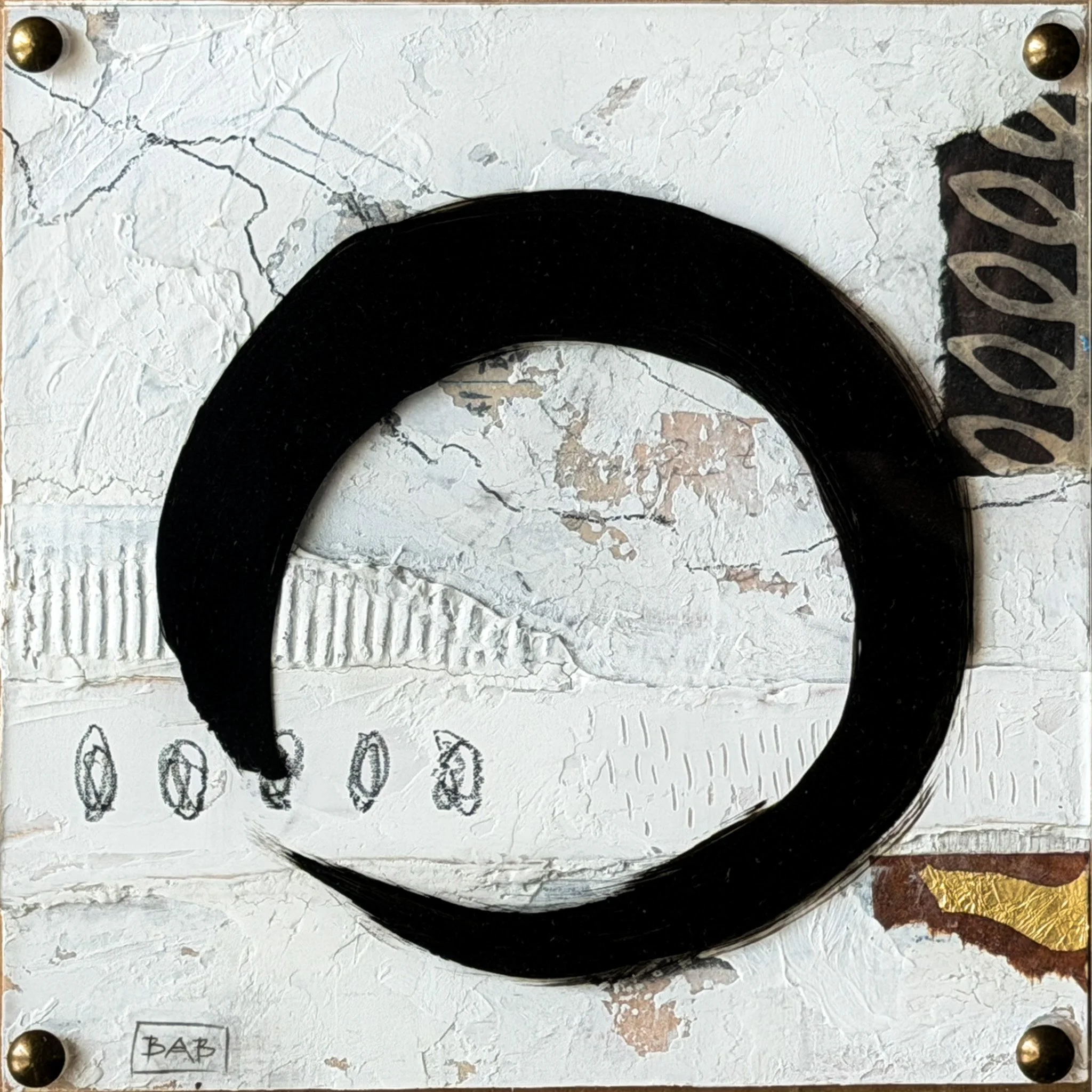
The Memory of Stone: Saba Rock
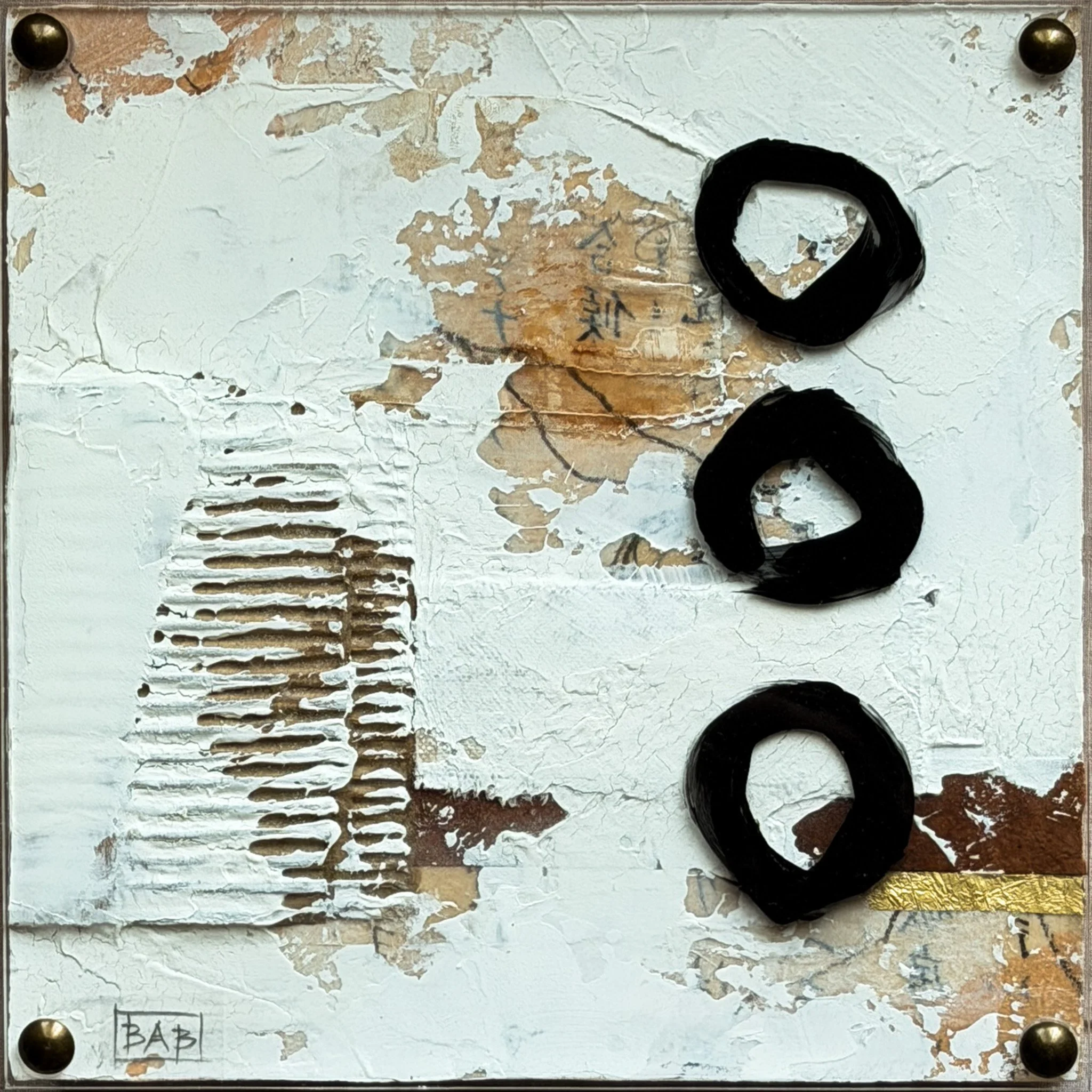
The Memory of Stone: Peter Island
The Memory of Stone: Jost Van Dyke
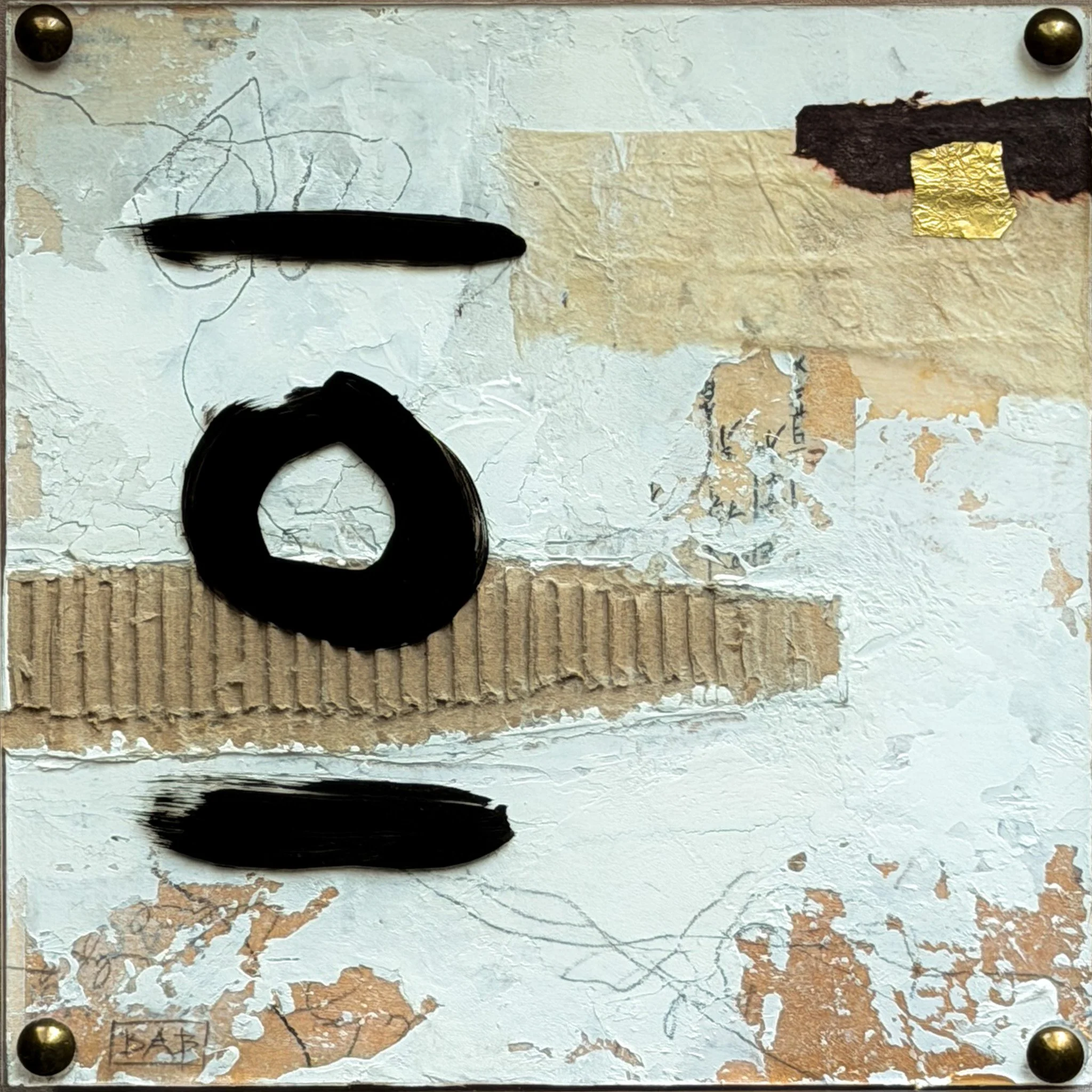
The Memory of Stone: St. Thomas
What A Mother Knows
A few years ago, my daughter Katherine arrived with a box of vintage children’s books. They had been chosen for her over many years—stories that had once belonged to her childhood. Knowing how often I gather old books and papers into my work, she asked if I might want them, to give them another life.
Of course, I said yes.
As we looked through them together, we came across a small book of children’s parables from the 1950s. One story was called “Katie’s Dream.”
“Maybe you could make something for me using this,” she said.
So I did. I filled the piece with fragments of that story, with images that felt like her, and with small phrases from her childhood that only a mother would remember. It is still her story—but one I had a hand in shaping. I gave it to her for her birthday.
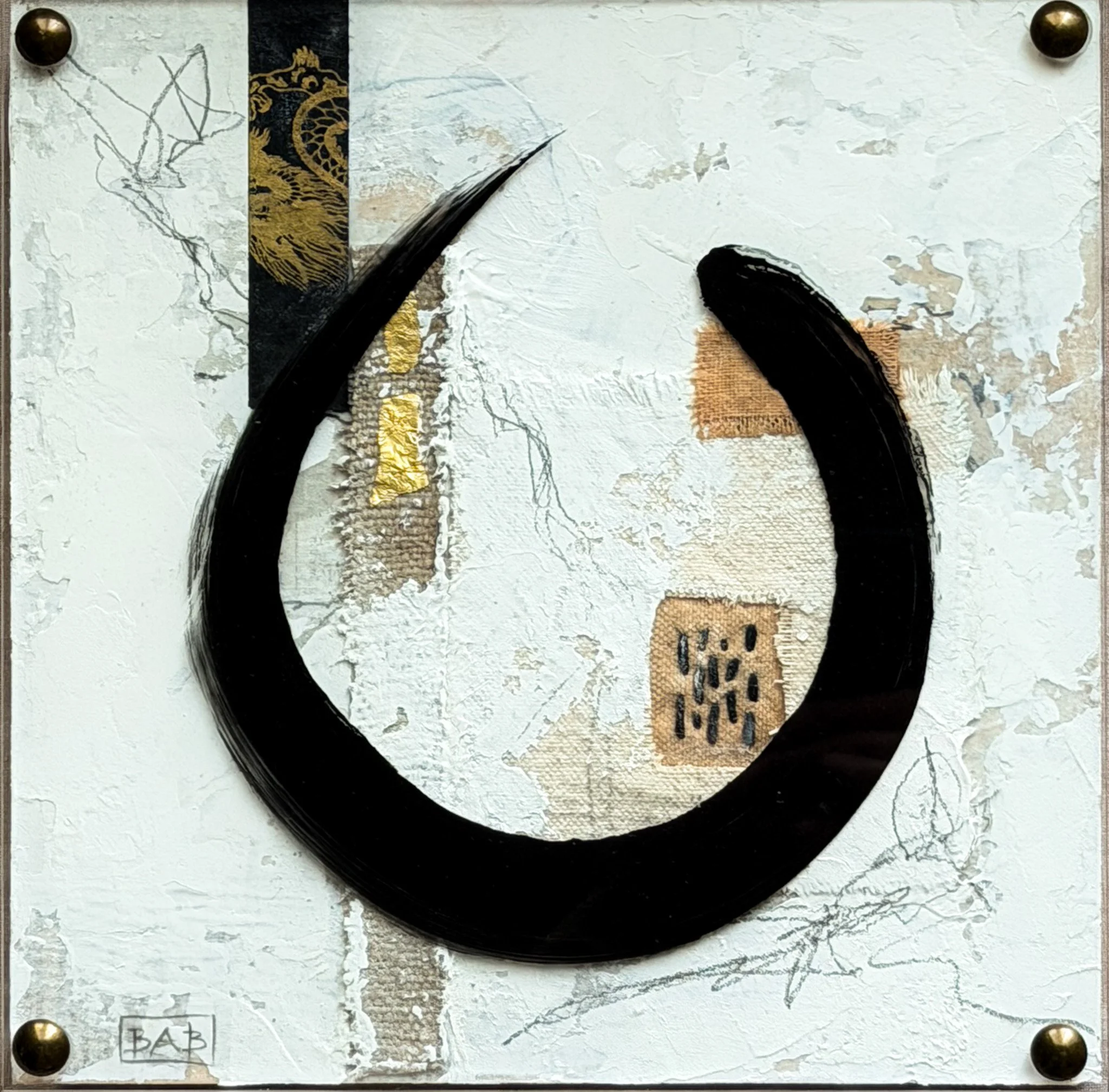
Years later, for my son Sam’s birthday, I made another piece. This one held colors, imagery, and fragments of Japanese text. Like Katie’s Dream, it rests beneath a sheet of clear plexiglass. The layers beneath hold the textures and memories of childhood, visible through the transparent surface of the present.
These pieces belong to my children, of course. But they are part of my story too, and I wanted to share them here.
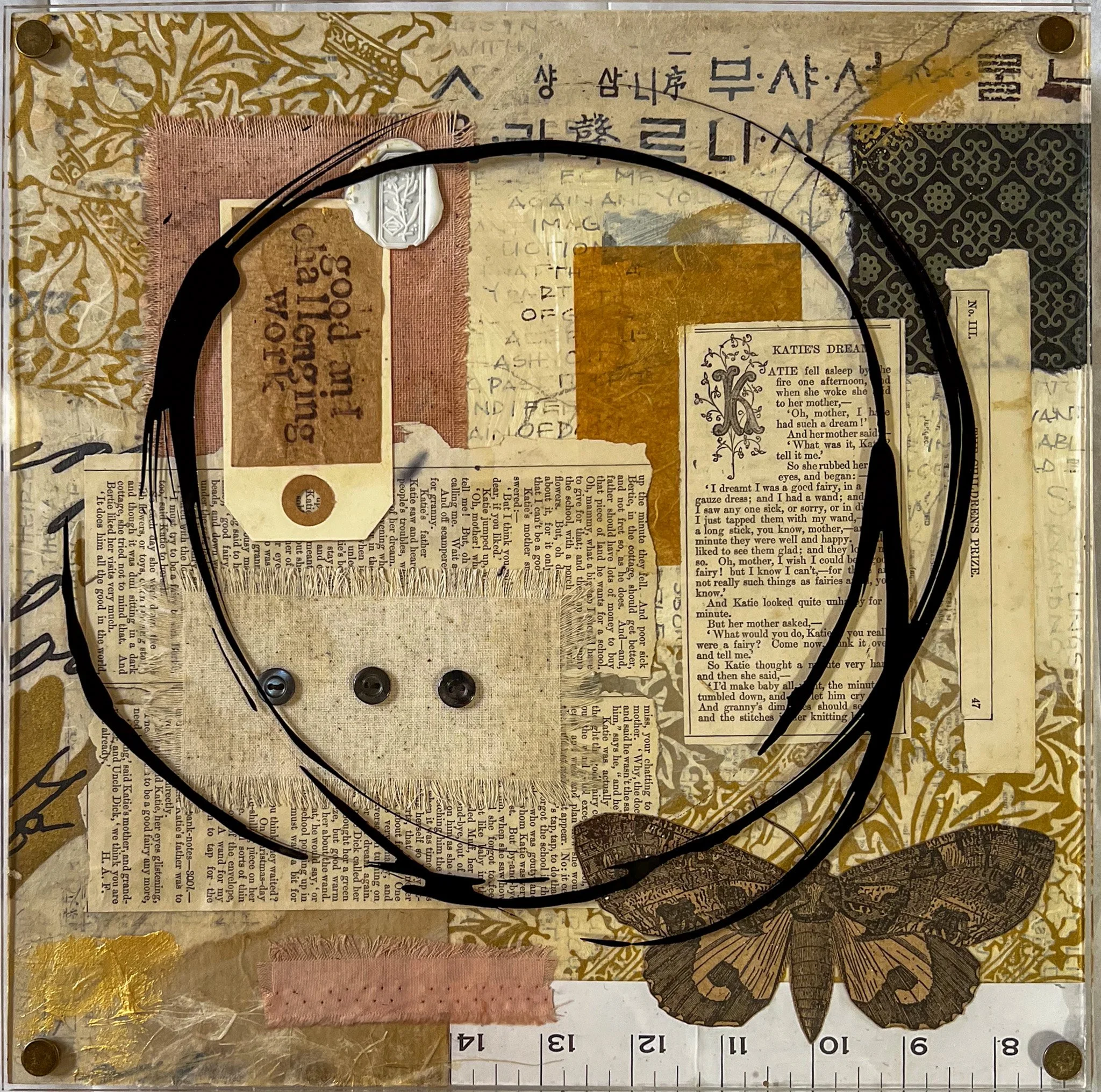
Katie's Dream
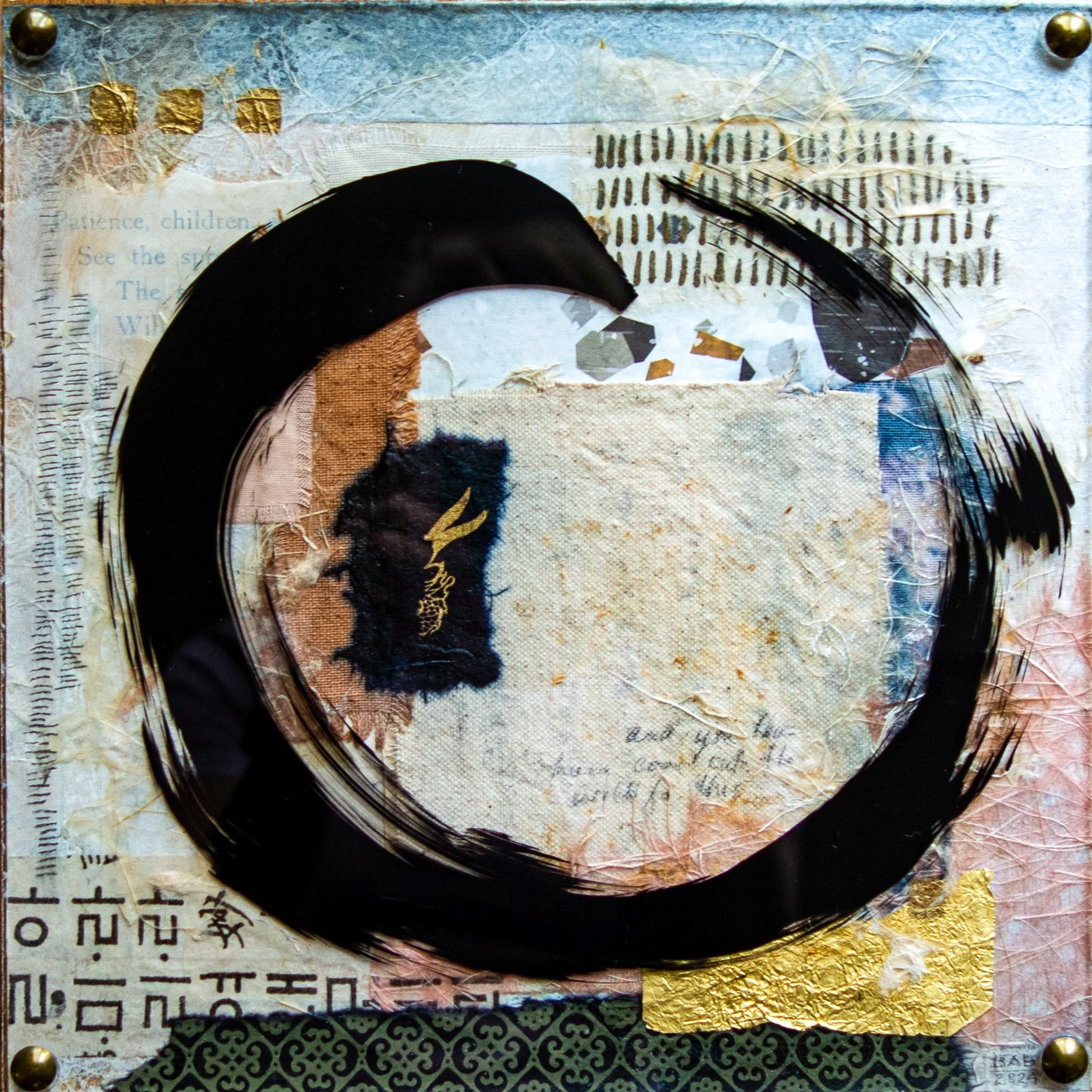
Enso for Sam
Learning to L.I.V.E.
In 2010, my 44-year-old sister became a widow. Recognizing her unusual ability to articulate the experience of grief—and to help others find meaningful ways to respond to it—we started a nonprofit for widows called Paisley Project.
Our work is guided by a framework we call L.I.V.E.: helping widows respond to their Loss, restore their Identity, develop a new Vision for the future, and Engage again with the world.
Over the years we have learned that creative expression—particularly art and writing—can be deeply healing. As a result, therapeutic creative practices are woven into all of our programming. I regularly lead workshops and classes in art-making and reflective writing.
This body of work was created in response to the unexpected beauty that can emerge after loss—the kind of beauty I have witnessed again and again in the lives of the widows we serve.
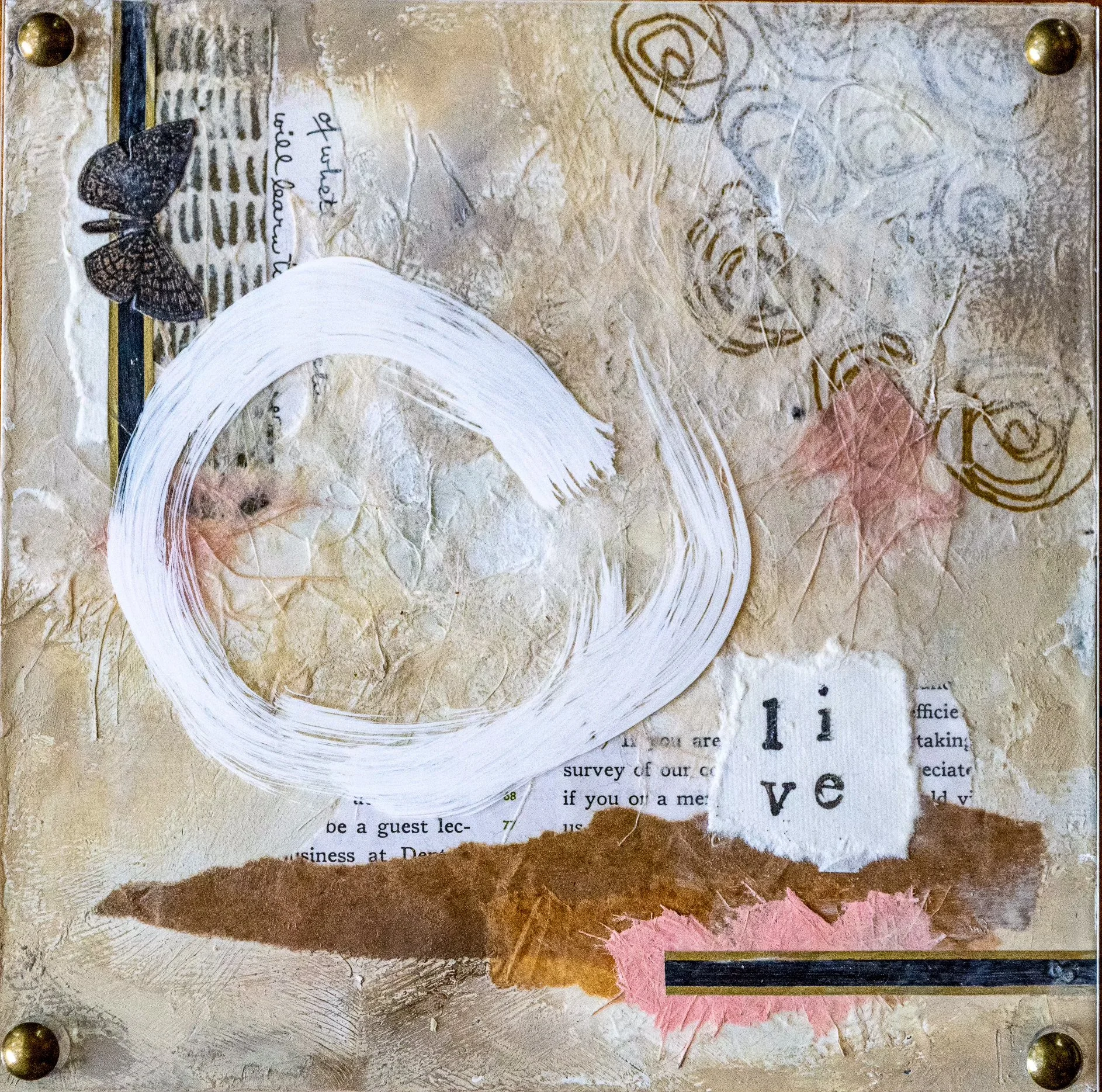
L.I.V.E. #1
L.I.V.E. #2
L.I.V.E. #3