Celtic Tree Alphabet
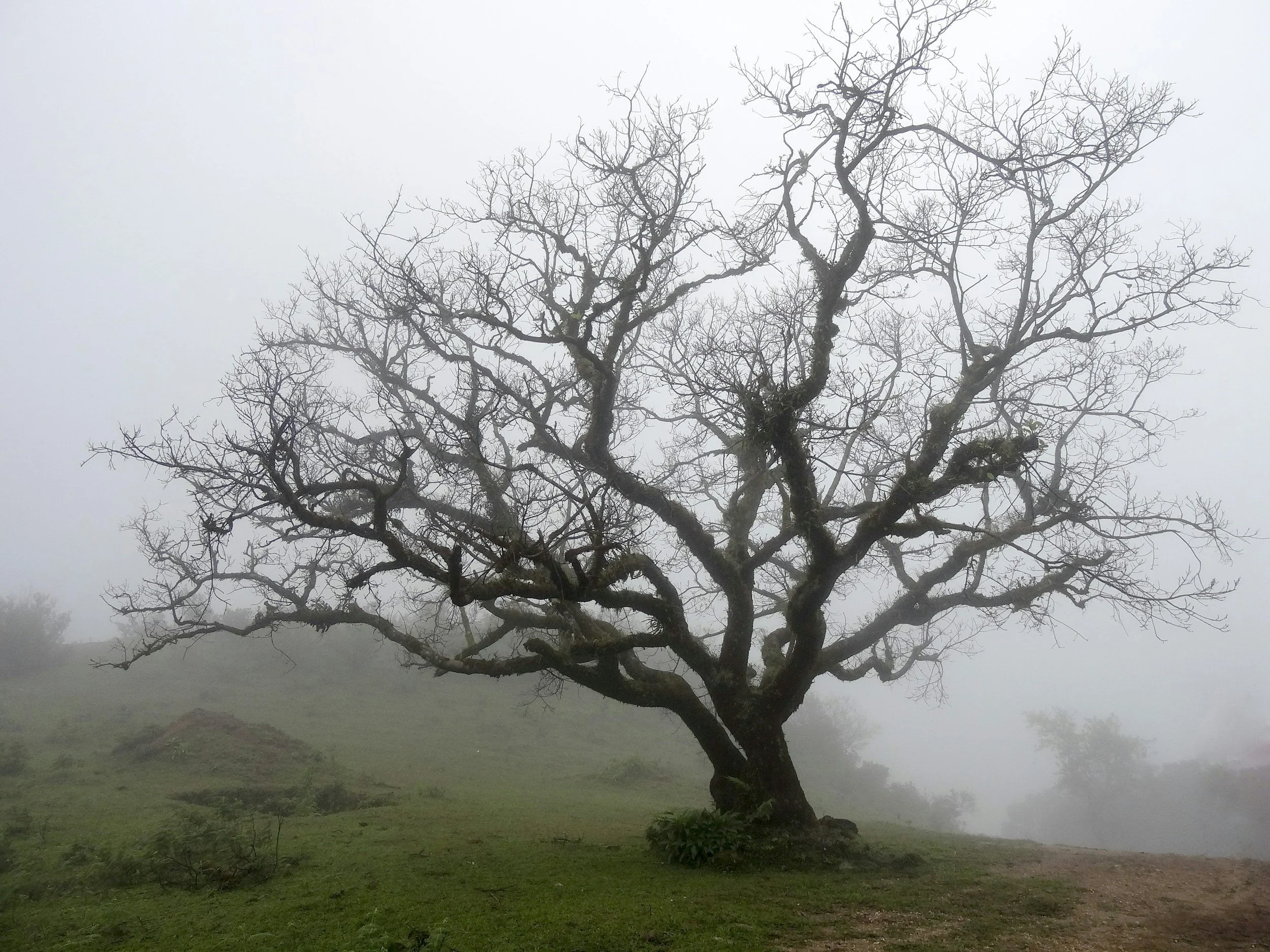
Although I have long been drawn to the Japanese concept of wabi sabi—and the simplicity, clarity, and quiet beauty found in Japanese culture—I began to wonder not long ago what my own cultural history might have to show me.
On both sides of my family, my ancestors came from the British Isles and Northern Europe. I have Scottish, Cornish, British, and Irish roots, and I was named after a Dutch great-grandmother who emigrated from the Netherlands. As I began tracing these histories, I discovered that many of these lineages lead back to the Celtic world.
Curious, I began exploring Celtic history, spirituality, and ways of seeing the world. One of the most fascinating discoveries I encountered was the Ogham alphabet, often called the Celtic Tree Alphabet.
This twenty-character alphabet, developed nearly 1,600 years ago, is composed of simple marks that resemble trees. Each letter begins with a vertical stem, and the different numbers and angles of the branching strokes distinguish one letter from another. It is both language and landscape at once.
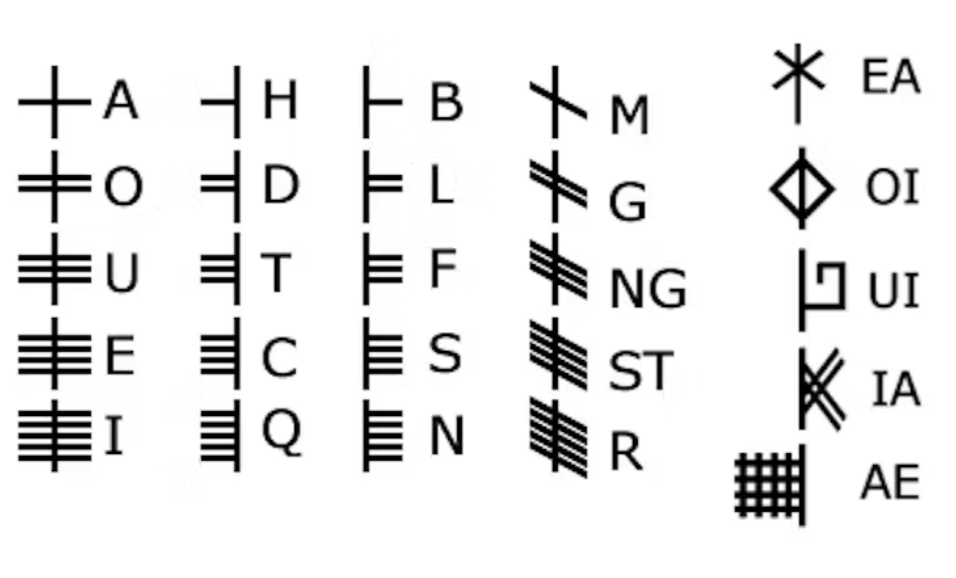
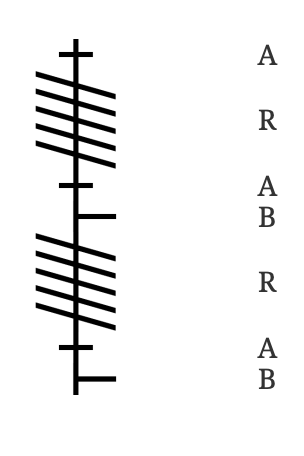
Of course, I had to see what my own name looked like in Ogham. I discovered the sequences that correspond to each of my names: Barbara, Allen, and Burke.
Each one is formed from a vertical line with gestures branching from it—soft, deliberate marks, almost like breath.
Barbara
Formed from marks linked to Birch and Ash—trees of renewal, grounding, and beginnings. Birch is the first letter of the Ogham alphabet, the opening note in a sequence of natural symbols. It carries the energy of fresh starts and clarity.
Allen
Shaped by strokes connected to Fir and Elm—trees associated with steadfastness and intuition. Their symbolism suggests shelter, resilience, and the quiet navigation between inner and outer worlds.
Burke
A combination of marks tied to Birch, Heather, and Hazel—symbols of inspiration, creativity, and insight. Hazel, in Celtic tradition, is the tree of wisdom and poetic vision.
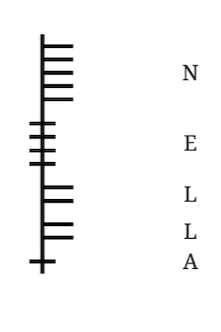
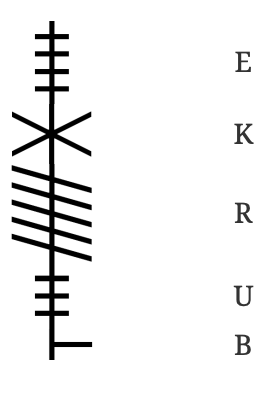
These meanings are beautiful, but I hold them lightly.
What resonates more deeply is the idea that a name can be rendered in a script rooted in trees—marks that carry both personal and ancient echoes. You can see the combined marks in the footer of this website.
Why These Marks Matter
Ogham begins with a single vertical stroke.
A grounded line.
A place to begin.
From that line, other marks extend outward—small gestures seeking connection, balance, and meaning.
When I first learned about Ogham, I recognized something familiar in its structure. It moves in a way that feels close to my own mark-making: rooted, intentional, exploratory.
These forms feel like companions to my practice. They remind me that language and nature are intertwined. That simple lines can hold entire histories. That what we create today is always connected to something older.
I haven’t yet decided how to use the Ogham alphabet in my work, but I plan to. In doing so I’m honoring origins—both personal and cultural. I’m acknowledging the long lineage of people who carved their stories into wood, stone, and earth. And I’m giving my own work a quiet signature that feels true to its foundations.
A grounding line.
A reaching outward.
A mark that becomes meaning.