Breathing Room
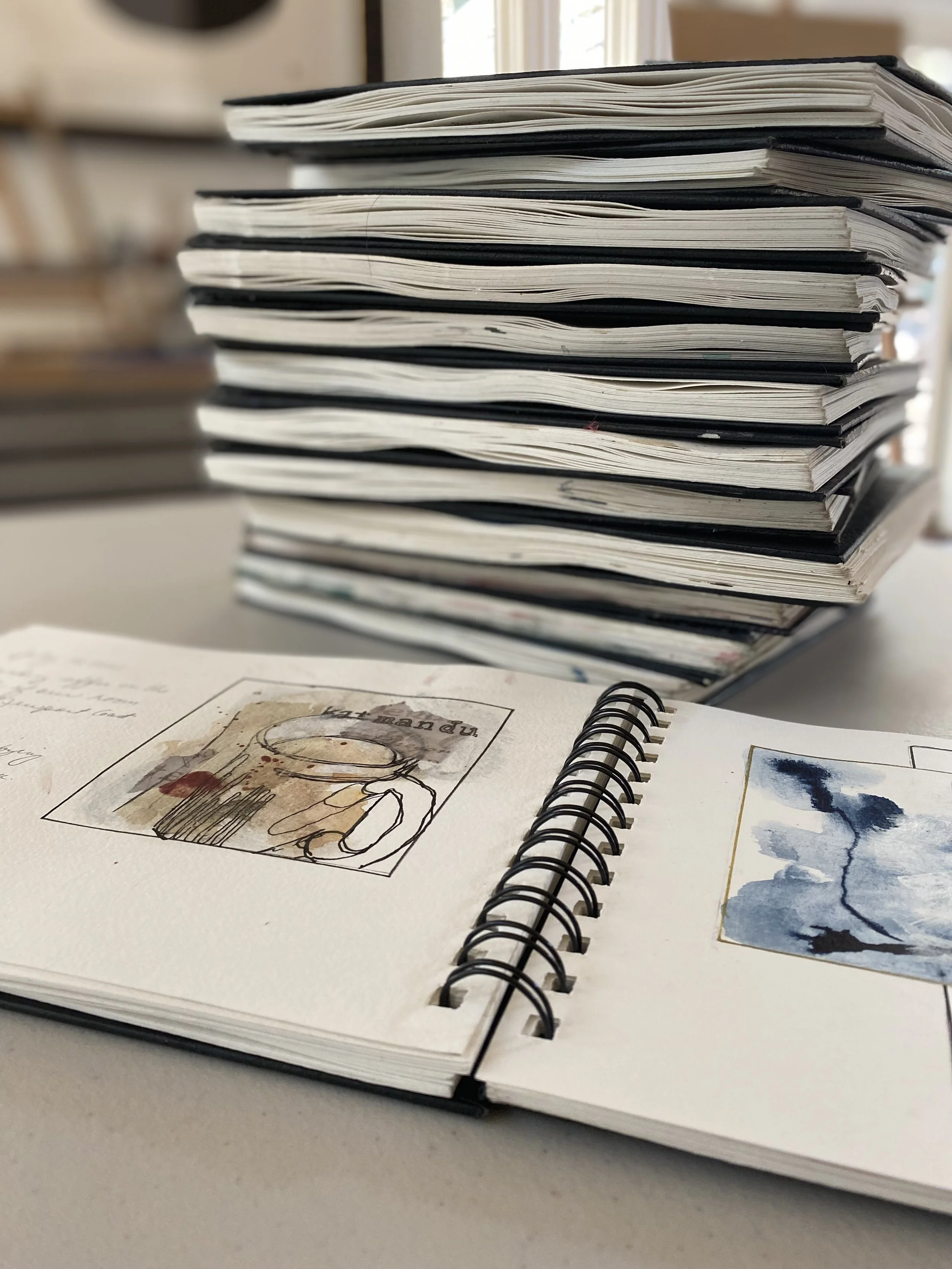
I was sitting on the floor surrounded by years’ worth of old sketchbooks when I noticed something I hadn’t been looking for
I was trying an art exercise suggested by Louise Fletcher, an English artist and teacher who posts regular YouTube videos about the practice of art. The video I watched was about finding the “seeds” of your artistic style. Rather than assuming your authentic style is something you need to figure out before you create, Fletcher suggests looking backward—specifically, through old sketchbooks.
I have piles of sketchbooks I’ve kept over the years, so I gathered them up and spent an afternoon slowly turning pages. I took photos of pieces that sparked something in me—work I found interesting, or that simply made me happy to look at. These, Fletcher suggests, are the “seeds” of the work you may want to grow in the future.
I took about 80 photographs and looked at what they had in common. A few things became clear. I was drawn to the neutral colors—tan, white, black, grey, sepia, and indigo. I often used thin lines and circles. Many of them included words or my own handwriting.
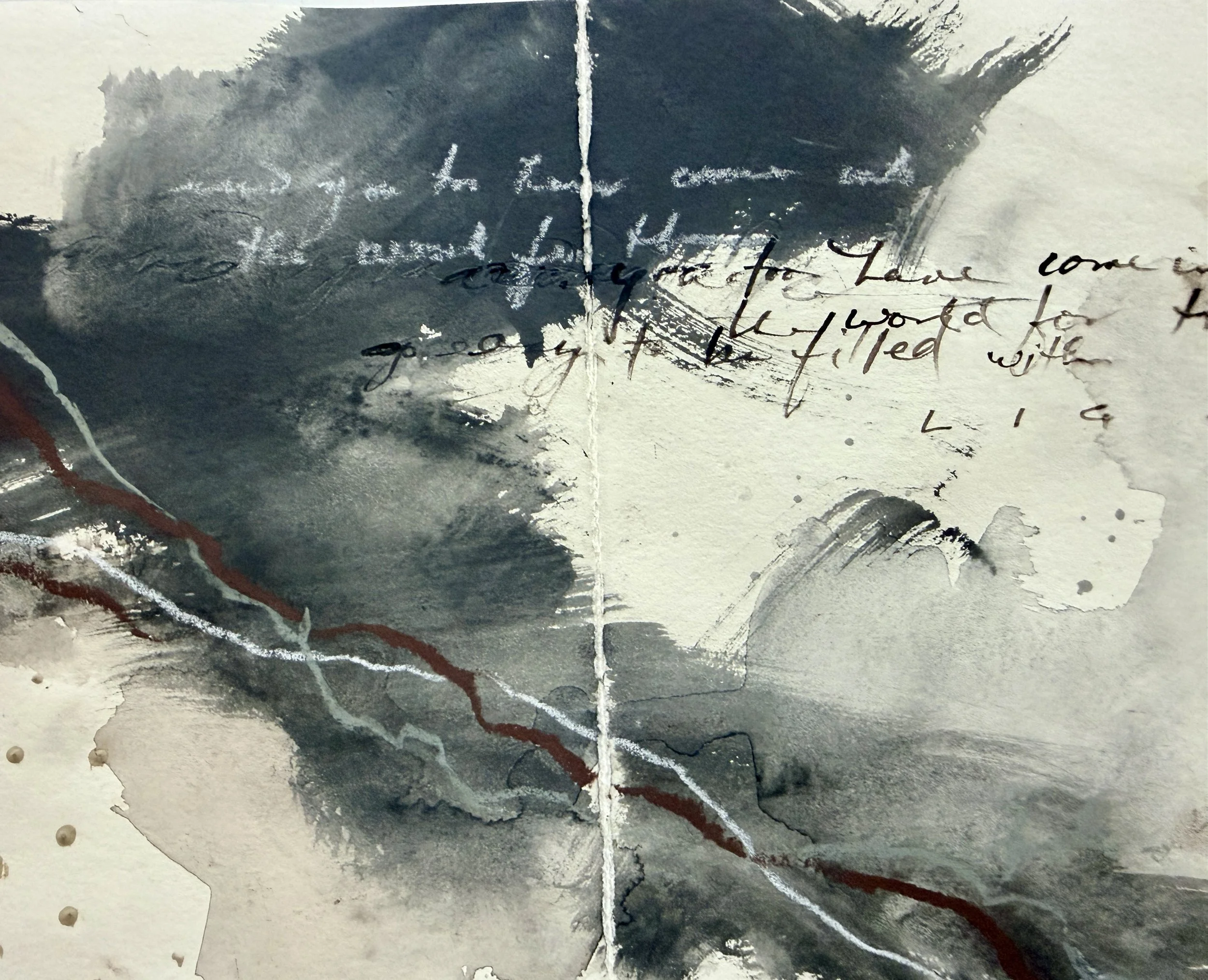
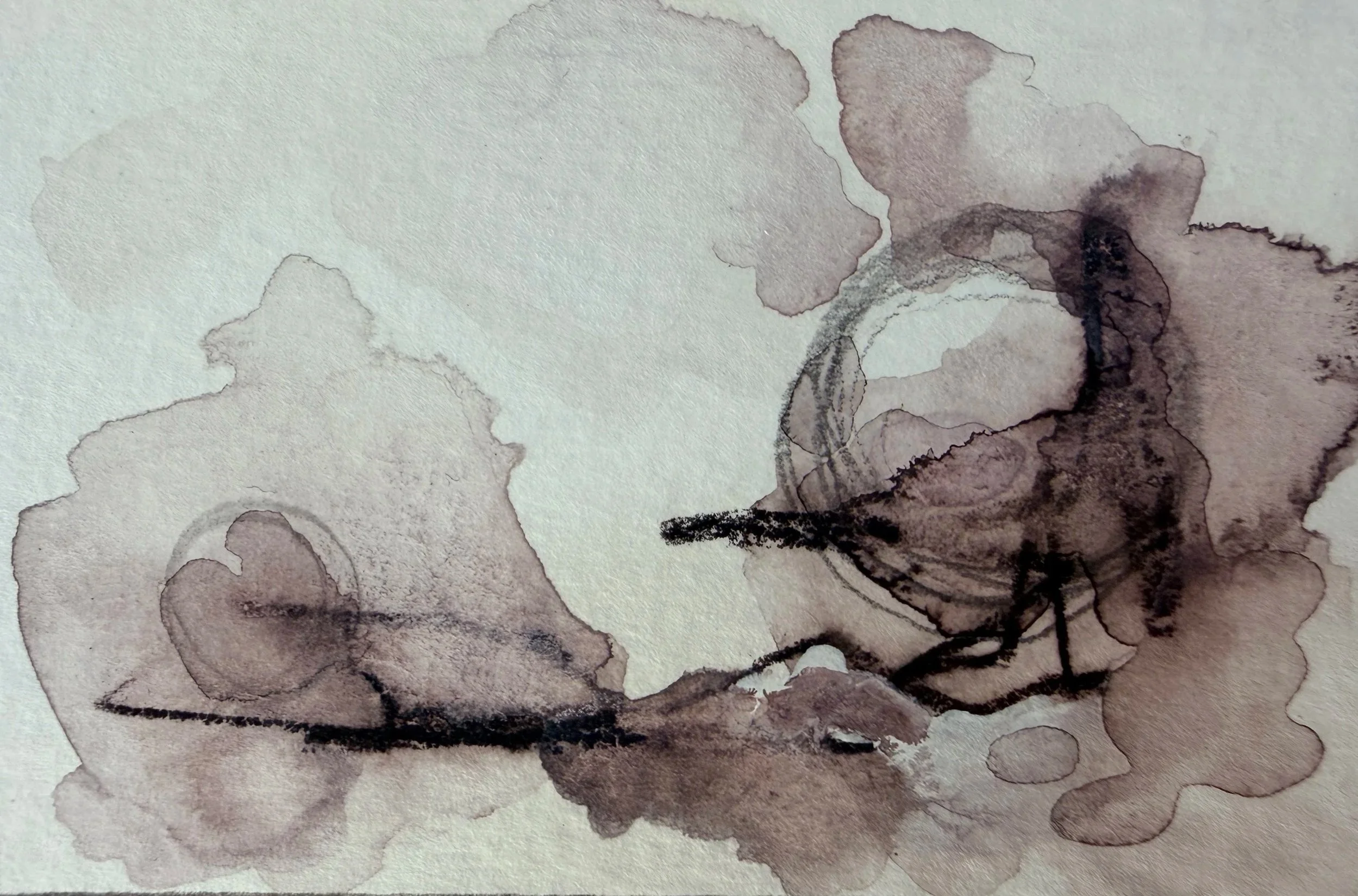
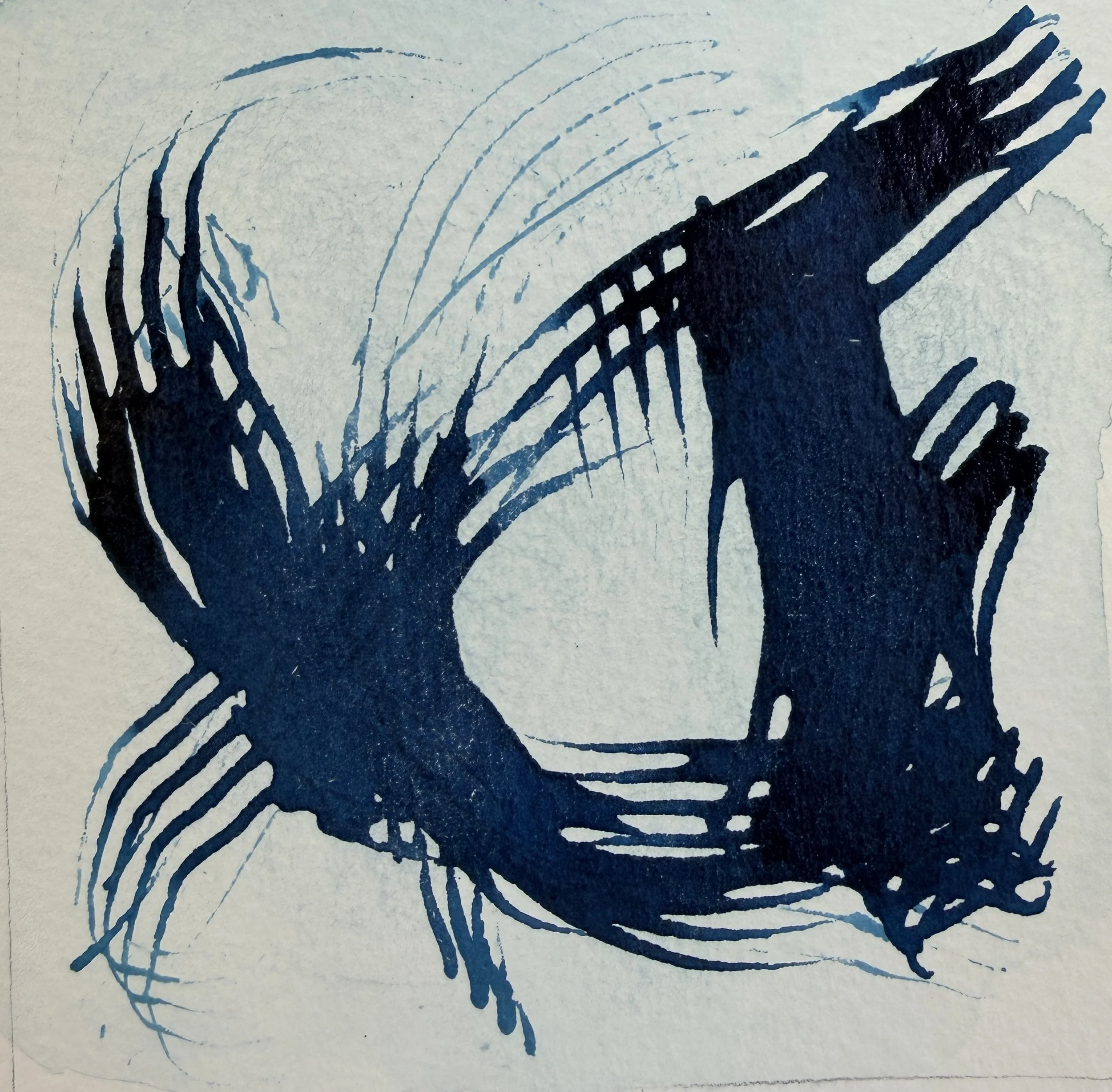
Most of all, I liked the pieces that felt peaceful and quiet, with lots of negative space and simple compositions. I’ll carry that information with me as I embark on new work.
But that wasn’t the biggest takeaway. I also came across plenty of pieces I didn’t like. This isn’t false modesty. I felt everything from disappointment to disconnection to being downright appalled.
Those pieces shared a theme, too. They were overworked. The used too many elements, too many colors, too many tools. I was clearly trying too hard to fix something that wasn’t working—adding more when I would have been better off stepping back and giving it room to breathe.
There’s that saying: The way you do anything is the way you do everything. That kept coming to me as I looked at page after page of overworked art.
It felt awfully familiar, this tendency to do too much, to keep trying to make a situation better when I might be better off stepping back, or simply giving it time.
Apparently, this is one of my strategies for life, too. If only I could figure out what more I could do to address the challenges facing my businesses, my friends, my kids, my parents—then surely I could somehow make it all work. And sometimes the result looks a lot like those overworked sketches: oversaturated, cluttered, messy. I often attemped to fix what perhaps needed less from me, not more.
I’m not entirely sure what the solution is. I do think it starts with noticing when I’m at that decision point. Do I add something? Do I take another stab at improving the situation? Or do I step away and let it breathe for a while?
Maybe this is about learning to find peace in the unfinished, to appreciate the empty, unfilled spaces, or to remember that I don’t have to do it all.
I don’t have to know how everything turns out before recognizing the grace and beauty that is already there.